


Do I Need a Thermal Expansion Tank at Home?
A new water heater can be installed perfectly and still face a pressure problem that starts somewhere else in the plumbing system. If you are asking, do I need a thermal expansion tank, the answer usually comes down to one question: can heated water expand backward into the incoming water line, or is it trapped inside your home?
For many Northeast Ohio homes, especially homes with a pressure-reducing valve, backflow preventer, check valve, or certain water-meter setups, the plumbing system is considered closed. In that situation, a properly sized thermal expansion tank is often needed to protect the water heater, plumbing fixtures, and pressure-relief valve from repeated pressure spikes.
What a thermal expansion tank actually does
Water expands as it heats up. In an older or open plumbing system, that small increase in volume can move back toward the public water main. When a check valve, pressure regulator, or backflow device prevents that movement, the extra volume has nowhere to go.
That is where an expansion tank comes in. It is a small tank, typically installed on the cold-water line near the water heater. Inside is a rubber bladder that separates water from a compressed air cushion. As water heats and expands, the tank accepts that extra volume instead of allowing system pressure to climb.
It is not an add-on meant to make a sale. It is a pressure-management device. When the plumbing conditions call for it, it helps the entire hot-water system operate the way it should.
Do I need a thermal expansion tank if I have city water?
Possibly. City water does not automatically mean you need one, but many municipal-water homes have devices that create a closed system. A pressure-reducing valve is a common example. It lowers high street pressure to a safer pressure for household plumbing, but it also commonly prevents water from pushing back toward the main.
A backflow preventer or check valve can do the same thing. Some of these devices are visible near the main water shutoff or water meter. Others may be built into equipment or installed where homeowners do not readily notice them.
The reliable way to decide is not to guess based on whether you have city water or well water. A qualified technician should identify the plumbing layout, measure incoming static water pressure, and verify local installation requirements. In many cases, the expansion tank is required by the water heater manufacturer instructions, local code, or both.
Homes on private wells need a closer look too
Well-water homes have a pressure tank, but that does not necessarily mean they have a thermal expansion tank. These are two different components with different jobs.
A well pressure tank stores water under pressure and helps the well pump avoid turning on every time someone opens a faucet. A thermal expansion tank is designed to absorb the volume increase created when a water heater heats water in a closed plumbing system.
Some well systems may have enough room for thermal expansion through the existing pressure tank arrangement. Others may include check valves, treatment equipment, or plumbing changes that isolate the water heater from that volume. Water treatment systems, including softeners and filters, can also change the way a home's plumbing is configured. That is why this should be evaluated as a whole system rather than by looking at one tank alone.
Signs your home may have thermal expansion problems
Pressure problems are not always obvious. You may have a closed system and need an expansion tank even if nothing is leaking today. Still, a few symptoms are worth taking seriously:
Water drips from the water heater's temperature and pressure relief valve, especially after a heating cycle.
A relief-valve discharge pipe is wet or leaves mineral staining nearby.
Faucets, toilet fill valves, washing-machine hoses, or appliance valves fail more often than expected.
Water pressure seems noticeably higher after the water heater has been running.
You see a small existing expansion tank near the heater that is corroded, leaking, or damaged.
A dripping temperature and pressure relief valve should never be plugged, capped, or ignored. That valve is a safety device, not a substitute for proper pressure control. It may be opening because of excessive water pressure, excessive temperature, a failing valve, or a combination of issues. The cause needs to be diagnosed.
Why an expansion tank matters for your water heater
Repeated pressure increases put stress on more than the water heater. They can contribute to leaks at fittings, damage to valves and supply hoses, nuisance relief-valve discharge, and premature wear on water-using appliances.
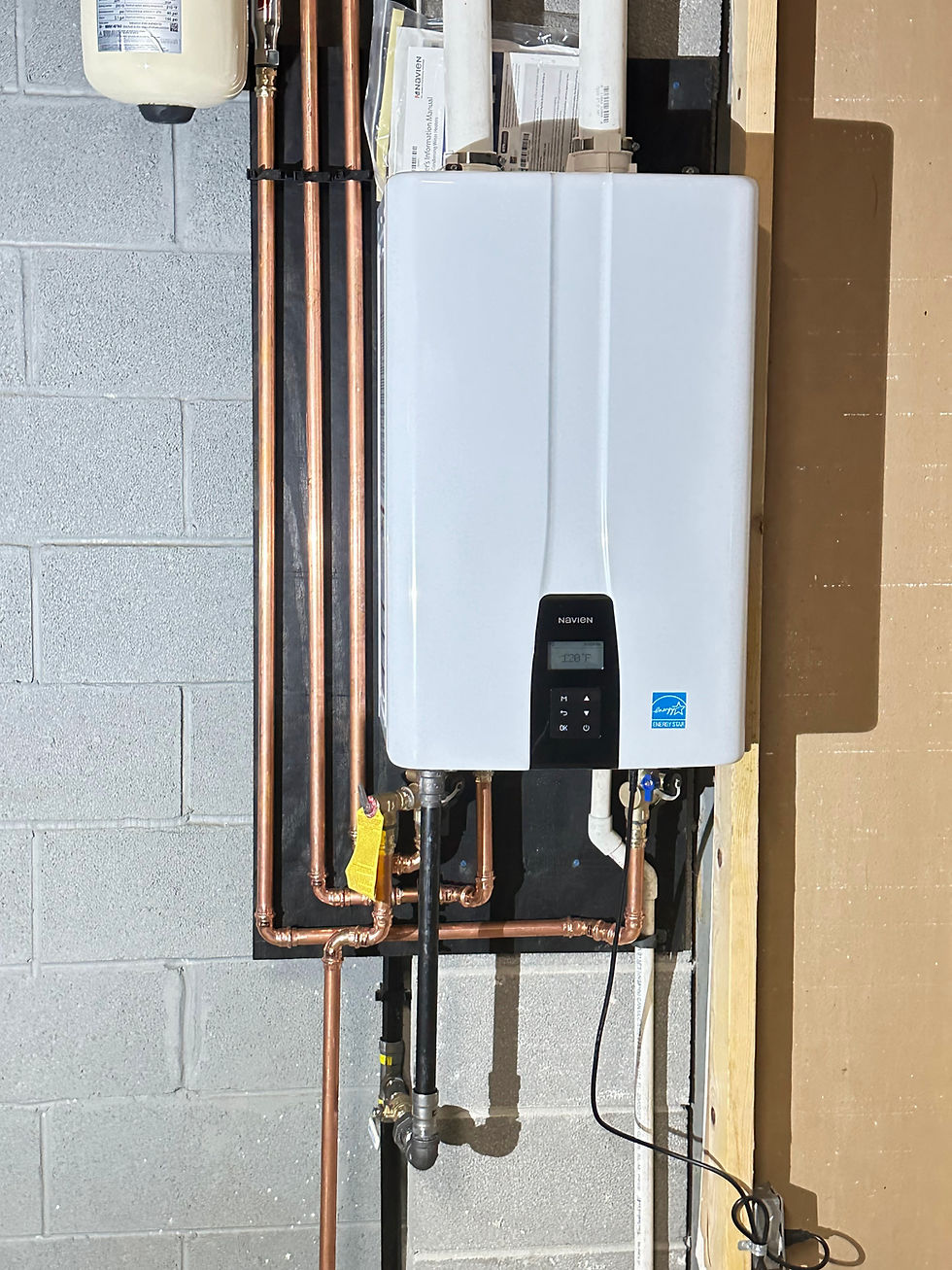
For a tank-style water heater, thermal expansion is especially relevant because the burner or heating elements repeatedly heat a large stored volume of water. A tankless water heater heats water only when there is demand, but it can still be part of a closed plumbing system that requires expansion control. The answer depends on the equipment, piping arrangement, manufacturer instructions, and local code - not just the heater style.
High water pressure is a separate issue that often appears alongside thermal expansion. Many homes should operate around 40 to 80 psi, and pressure above 80 psi is commonly considered excessive for residential plumbing. A pressure-reducing valve may be needed when incoming street pressure is too high. An expansion tank does not replace a faulty or improperly adjusted pressure-reducing valve.
Proper sizing and installation are not guesswork
Expansion tanks are not one-size-fits-all. The right size depends on the water heater's capacity, incoming water pressure, the expected temperature rise, and the plumbing system. A larger water heater or higher supply pressure may require more expansion capacity.
The air precharge inside the expansion tank matters as well. Before installation, it should generally be set to match the home's static water pressure. If the precharge is wrong, even a correctly sized tank may not absorb expansion effectively.
Installation details count. The tank needs proper support, a suitable connection point on the cold-water side, and service access for future inspection or replacement. A heavy, water-filled tank should not be left hanging from unsupported piping. Professional installation also helps ensure the pressure-relief valve, discharge piping, shutoff valves, venting, gas connections, and electrical work are all evaluated appropriately when a water heater is replaced.
What if an expansion tank is already installed?
Expansion tanks do not last forever. The internal bladder can fail, the air charge can be lost, and the exterior can corrode in damp locations. A tank may look fine from the outside while no longer doing its job.
A technician can test the tank and the home's water pressure rather than replacing parts blindly. If the tank has failed, replacing it with the correct size and setting the proper precharge is the practical fix. If pressure remains too high after that, the pressure-reducing valve and other plumbing conditions should be checked.
This is also a good time to look at water quality. Hard water can leave scale on valves and shorten the life of water-heater components, while well-water conditions may affect fixtures and plumbing in other ways. The right solution may involve water treatment, pressure correction, and water-heater service together rather than treating each symptom as an isolated problem.
A straightforward way to get the right answer
If you are replacing a water heater, adding a pressure-reducing valve, updating plumbing, or seeing relief-valve discharge, ask for a pressure and expansion evaluation as part of the work. It is a small step that can prevent expensive headaches later.
Makeithot Water Heaters LLC can inspect the water heater and connected plumbing, explain whether your system is open or closed, and recommend only the equipment the home actually needs. You should get a clear explanation of the problem, the repair options, and the reason behind the recommendation - without pressure to buy something that does not fit your system.
A thermal expansion tank is a modest piece of equipment, but it can make a meaningful difference when water pressure has nowhere else to go. If your water heater is due for service or your relief valve is dripping, have the system checked before a small pressure issue turns into a leak, a failed appliance part, or an unexpected no-hot-water call.

Comments