


When Hot Water Replacement Makes Financial Sense
The morning shower turns cold, the utility-room floor is damp, or the water heater starts making a sound it never made before. Those are not problems to ignore until a more convenient week. Hot water replacement is often a planned home upgrade, but it can also become urgent quickly when a tank leaks or a critical component fails.
For Northeast Ohio homeowners, the right decision is rarely as simple as choosing the lowest-priced tank. Your home’s fuel source, hot-water demand, venting, water quality, available space, and the age of the current unit all matter. A qualified water-heater specialist can explain those factors clearly and help you choose a repair or replacement that makes sense for your house and budget.
When Hot Water Replacement Is the Better Call
A water heater does not need replacement every time it has a problem. Thermostats, heating elements, igniters, gas control components, pressure-relief valves, and connections can often be repaired. If the tank is relatively new, the repair is straightforward, and the rest of the unit is in good condition, repair may be the honest recommendation.
The equation changes when the tank itself is leaking. Once corrosion has created a leak in the tank wall or at the bottom seam, the tank cannot be repaired safely or reliably. Turning off the water supply and arranging replacement promptly can prevent significant damage to flooring, walls, stored belongings, and finished spaces below the heater.
Age is another useful clue. Conventional tank water heaters commonly last about eight to 12 years, although actual life varies with water quality, maintenance, usage, installation conditions, and equipment quality. A seven-year-old unit with a replaceable part may be worth fixing. A 12-year-old unit needing an expensive repair deserves a more careful comparison, especially if rust, discolored hot water, reduced capacity, or frequent breakdowns are already showing up.
Pay attention to these warning signs:
Water around the base of the heater, especially when the source is the tank rather than a nearby pipe or valve
Rusty or brown hot water that appears primarily from the hot side of faucets
Rumbling, popping, or banging caused by sediment buildup in a tank
Hot water that runs out much faster than it used to
Repeated pilot, ignition, burner, thermostat, or heating-element issues
A unit that is approaching or beyond its expected service life
A leaking pressure-relief valve, loose fitting, or failed expansion tank is not the same as a leaking water-heater tank. The distinction matters. A proper diagnosis can save homeowners from replacing equipment that still has useful life, while also catching safety concerns that should not wait.
Choose the Right Replacement, Not Just a New Tank
The best replacement should fit the way your household actually uses hot water. A family with two busy bathrooms, laundry, and a dishwasher running in the evening needs a different solution than a one-bath home with one or two residents.
Conventional gas and electric tank water heaters
A standard tank water heater remains a practical, dependable choice for many homes. It stores a set amount of heated water, usually 40 to 75 gallons in residential applications, and offers a familiar installation with predictable performance. Proper sizing matters more than many people realize. Installing the same gallon size as the old heater may be correct, but it may also repeat a long-standing shortage if household demand has changed.
Gas models generally recover hot water faster than comparable electric tanks, which can be helpful for larger households. Electric tanks can be a sensible option where gas is unavailable or where electrical service and household demand support the installation. Both options should be installed with correct safety controls, connections, and code-required components.
Power-vent water heaters
Some homes use a power-vent water heater that relies on an electric blower to move combustion gases through approved vent piping. Replacing a power-vent unit with another power-vent model is often the most practical route, but venting condition, pipe material, length, termination location, and electrical supply need inspection. It is not a simple swap in every case.
Because the blower and controls add complexity, professional diagnosis is especially valuable when a power-vent heater stops working. A failed blower or pressure switch does not automatically mean the entire heater needs replacement. On an older unit, however, a repair may not be the best long-term investment.
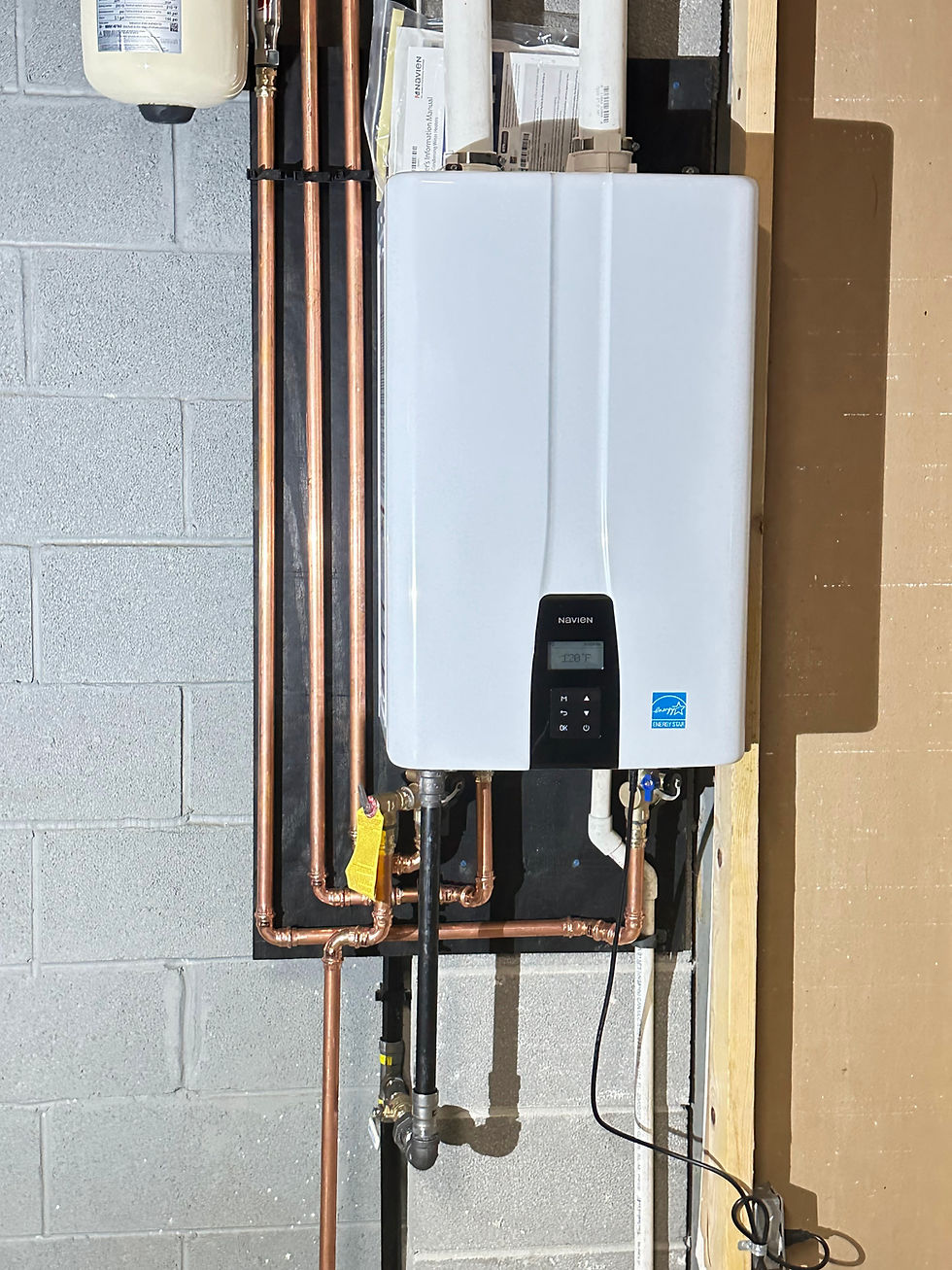
Tankless water heaters heat water as it flows through the unit instead of storing it in a tank. They are popular for their space-saving design, long service potential, and ability to provide continuous hot water when properly sized. The key phrase is properly sized.
A tankless system must be selected based on expected flow rate and the incoming water temperature. Northeast Ohio’s cold winter groundwater can reduce a unit’s available output compared with warmer climates. Running two showers, a dishwasher, and laundry at the same time may require more capacity than a small tankless unit can provide. Gas piping, combustion air, venting, condensate drainage, and electrical requirements may also need upgrades.
Tankless systems are an excellent fit for some homes, but they are not automatically the best fit for every home. A clear load calculation and inspection should come before any recommendation.
Hybrid heat-pump water heaters
Hybrid heat-pump water heaters use electricity differently from standard electric tanks. They pull heat from surrounding air and can reduce water-heating energy use in the right location. They work best in spaces with enough air volume and suitable temperatures, such as larger basements or utility areas.
There are trade-offs. Hybrid units can create some cooling and dehumidification in the space, may make more noise than a standard electric tank, and need a condensate drain. Their recovery performance also needs to match your household’s hot-water habits. For the right homeowner, the operating-cost savings can be attractive. For another household, a gas tank or properly sized tankless model may be more practical.
Water Quality Can Shorten Heater Life
Northeast Ohio homes on private wells often deal with hardness minerals, iron, sulfur odor, sediment, or other water conditions that affect fixtures and appliances. City-water homes can have hardness and sediment concerns, too. Those minerals can collect in a tank, reduce efficiency, contribute to noise, and make drain valves harder to service.
A replacement is a smart time to consider the condition of the water entering the home. A water-treatment solution may help protect the new water heater, improve cleaning results, reduce scale on fixtures, and make hot water feel better at the tap. The appropriate system depends on a water test and the specific issue, not a one-size-fits-all sales pitch.
For tankless equipment, water quality deserves particular attention because scale can build inside the heat exchanger. Periodic flushing is part of responsible tankless ownership, especially with hard water. Planning for service access during installation makes future maintenance easier.
Installation Details That Protect Your Home
The water heater is only one part of the hot-water system. Safe replacement work includes checking the water, gas, electrical, venting, drainage, and pressure-control conditions around it.
For gas units, the installer should verify gas-pipe sizing, shutoff operation, venting requirements, combustion-air needs, and safe operation after startup. For electric and hybrid equipment, correct circuit capacity, disconnecting means where required, and wiring condition matter. Water connections, shutoff valves, drain pans, discharge piping for the temperature-and-pressure relief valve, and thermal-expansion protection may also need attention depending on the home’s plumbing system and local requirements.
This is why the lowest replacement quote is not always the lowest total cost. An incomplete installation can lead to leaks, venting problems, code issues, shortened equipment life, or another service call soon after the job. Ask what is included, what condition the existing connections are in, and whether any upgrades are necessary before work begins.
Plan Ahead When You Can, Act Fast When You Must
If your heater is aging but still working, proactive replacement gives you time to compare equipment types, consider efficiency, and schedule installation around your household. You are less likely to make a rushed decision after a tank fails on a weekend or during a cold-weather stretch.
If there is active leakage, a gas odor, signs of improper venting, electrical damage, or no hot water for the household, prompt professional service is the better move. Shut off the water supply to a leaking heater if you can do so safely, avoid attempting gas or electrical repairs yourself, and have the system evaluated.
Makeithot Water Heaters LLC helps homeowners weigh these choices without pressure, from straightforward tank replacements to tankless, power-vent, hybrid, water-treatment, plumbing, and gas-system needs. A free honest second opinion can be especially useful when a recommendation feels rushed or unclear.
A new water heater should give you more than hot showers. It should give you confidence that the equipment was sized correctly, installed safely, and chosen for the water and daily demands of your home.

Comments