


Home Water Heater Sizing Guide for Ohio Homes
A water heater can look plenty large on paper and still leave the last person in line with a cold shower. That is why a useful home water heater sizing guide starts with how your household actually uses hot water during its busiest hour, not just the number of bedrooms or the size of the old tank.
For Northeast Ohio homes, sizing also has to account for cold winter groundwater, older plumbing layouts, hard water, and the equipment already in place. The right answer may be a conventional tank, a high-recovery gas model, a tankless unit, or a hybrid heat-pump water heater. It depends on demand, fuel source, installation conditions, and what matters most to your family.
Start With Your Household's Peak Hot-Water Hour
Your peak hour is the 60-minute period when your home is most likely to use hot water at the same time. For many families, that is weekday morning: one or two showers, someone washing hands, a dishwasher starting, and perhaps a load of laundry. In other homes, the busy period happens after work and sports practices.
Think about the fixtures and appliances that may run together. A typical shower uses roughly 10 to 20 gallons of hot water, depending on length and showerhead flow. Bathing, laundry, dishwashing, and handwashing add demand quickly. Two long showers back to back can use more hot water than a small tank can deliver before it has time to recover.
Do not size strictly by household headcount. A two-person household with staggered showers may be comfortable with a smaller system than a two-person household that fills a soaking tub every evening. Likewise, a family of five with short showers and a high-recovery gas water heater may need less stored capacity than expected.
Tank Water Heater Sizing: Look at First-Hour Rating
For a conventional tank water heater, the most useful number is the first-hour rating, often called FHR. This is the approximate number of gallons of hot water the heater can supply during a busy hour when starting with a full tank. It includes stored hot water plus the water the unit can heat as it operates.
Tank capacity and first-hour rating are not the same thing. A 50-gallon gas water heater may have a much stronger first-hour rating than a 50-gallon electric model because gas burners generally recover more quickly. That difference matters when several people need showers close together.
A practical starting point for many homes is:
Smaller households with one bathroom may be well served by a 40- to 50-gallon tank, depending on fuel type and habits.
Families of three to four often need a 50-gallon gas unit, a 50- to 65-gallon electric unit, or a higher-recovery model.
Larger families, homes with multiple showers running at once, or homes with large tubs may need 65 to 80 gallons, a high-input gas heater, or a different equipment type.
These ranges are only a starting point. The product label provides the actual first-hour rating, and that number should meet or exceed your estimated peak-hour need. A larger tank is not automatically better if it costs more to operate and sits unused most of the day. But undersizing a heater usually creates daily frustration that no thermostat adjustment can solve.
Recovery Rate Matters as Much as Storage
Recovery rate is how many gallons of water a heater can raise to its set temperature in an hour. A high-recovery gas tank can be a smart choice when you need dependable back-to-back showers but do not have the conditions or budget for tankless equipment.
Electric tank heaters typically recover more slowly. They can still be an excellent fit, especially where gas is unavailable, but their sizing should allow for that recovery difference. If your old electric 40-gallon unit repeatedly runs out of hot water, replacing it with another 40-gallon unit may repeat the same problem.
How to Size a Tankless Water Heater
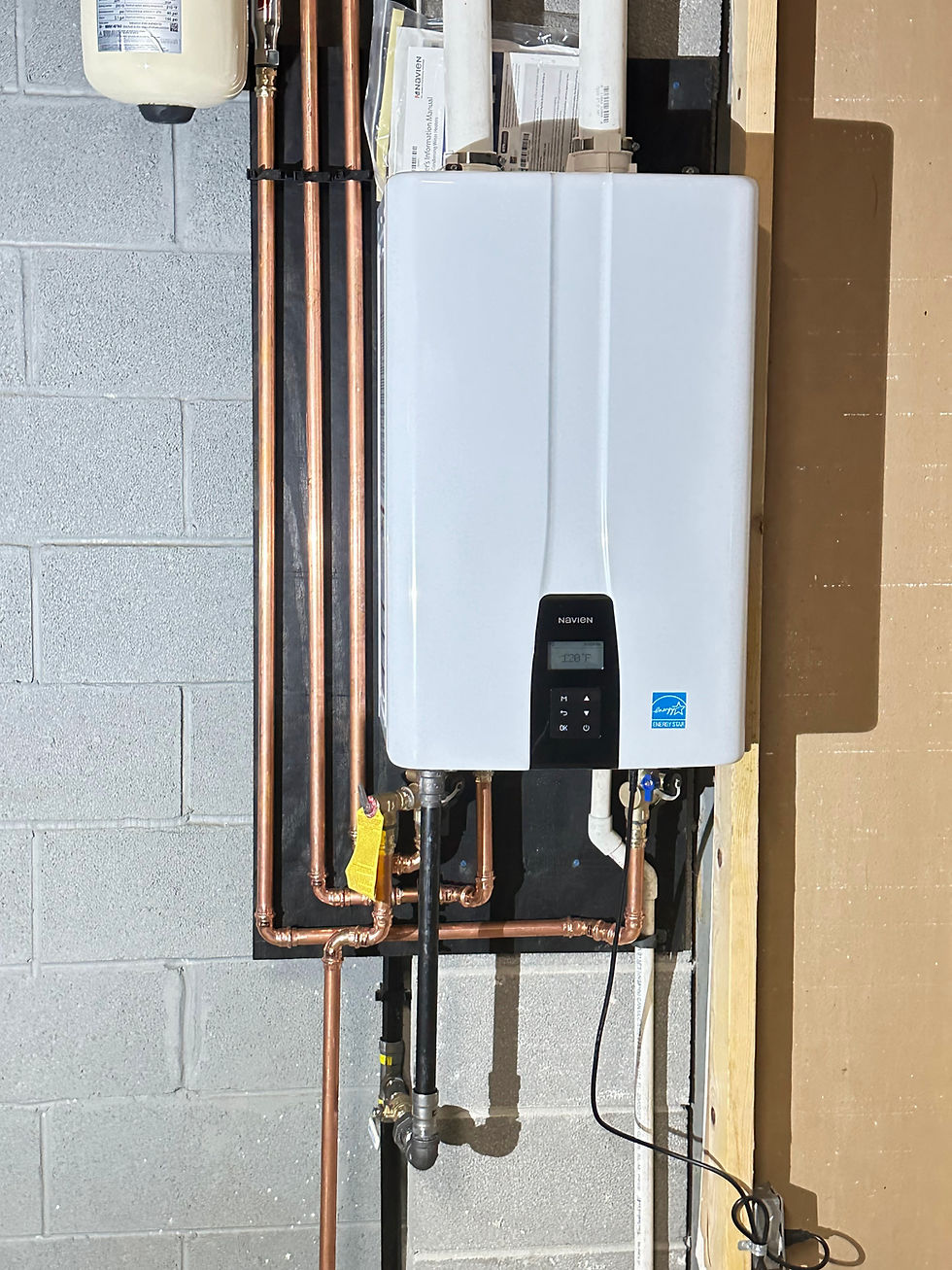
Tankless water heaters are sized by flow rate, measured in gallons per minute, rather than stored tank capacity. The question is not, “How many gallons does it hold?” It is, “How many fixtures can it heat at once at the required temperature?”
Start by adding the flow rates of fixtures that may operate together. For example, two showers at 2.0 gallons per minute each and a kitchen faucet at 1.0 gallon per minute create a possible 5.0-gallon-per-minute demand. That does not mean every home needs a unit rated exactly at 5.0 GPM. It means the unit must produce enough heated water for that demand under local incoming-water conditions.
That last part is critical in Northeast Ohio. Tankless performance changes with the temperature rise required. In winter, incoming water can be much colder than it is in summer. A unit that performs impressively at a modest temperature rise may provide less flow when it has to raise cold groundwater to a comfortable shower temperature.
A qualified installer should calculate the expected temperature rise, verify gas-line capacity or electrical requirements, inspect venting, and confirm whether the unit can support simultaneous use. Larger tankless models are not always the answer. If the gas supply line, venting path, condensate drain, or electrical service needs upgrades, those installation details belong in the decision.
Tankless systems can provide long-duration hot water and save space, but they are not automatically the best option for every home. They cost more upfront, need periodic maintenance, and perform best when properly matched to the household and installed to manufacturer specifications.
Sizing a Hybrid Heat-Pump Water Heater
Hybrid heat-pump water heaters pull heat from the surrounding air and use it to heat water efficiently. They are often a strong choice for homeowners focused on lowering electric water-heating costs, particularly when the unit will sit in a basement, utility room, or garage with enough surrounding air volume.
Sizing still matters. A hybrid unit has a storage tank, but heat-pump-only recovery can be slower than standard electric resistance heating. Many models can switch to electric elements during heavier demand, but that can reduce the efficiency benefit. A larger tank often helps a busy household keep the unit in its most efficient operating mode.
Before choosing one, consider the installation space, ambient temperature, noise level, condensate drainage, ceiling height, and whether cooling and dehumidifying the room is a benefit or a drawback. In a conditioned area, the heat pump is moving heat from the room into the water, so placement deserves careful thought.
Water Quality Can Change the Recommendation
Hard water and well-water conditions affect more than taste and laundry. Mineral scale can reduce heat transfer, shorten component life, and make a water heater less efficient over time. Tankless heat exchangers are particularly sensitive to scale buildup when water hardness is high.
If your home uses well water or has known hardness, iron, sulfur odor, or sediment concerns, include water treatment in the water-heater conversation. A properly selected softener or treatment system can protect the new equipment and improve performance throughout the home. It is often better to address the source of the problem than keep replacing parts affected by poor water quality.
Do Not Size a New Heater by the Old One Alone
An old water heater is useful evidence, but it is not a complete sizing plan. If it met your needs for years, its capacity and first-hour rating provide a reasonable baseline. If your household changed, you added a bathroom, installed a larger tub, started working from home, or regularly run out of hot water, the replacement should reflect those changes.
Also consider whether the old unit was truly performing at full capacity. Sediment, aging burners or elements, thermostat issues, and mineral buildup can make a correctly sized heater feel too small. A professional diagnosis can separate a repairable performance problem from a genuine need for more capacity.
For homeowners who want a clear answer without a sales pitch, Makeithot Water Heaters LLC can evaluate peak demand, fuel and venting requirements, installation space, and water quality before recommending equipment. The goal is dependable hot water that fits the home, not simply the biggest unit that will fit through the door.
The best-sized water heater is one your family does not have to think about. When showers, dishes, laundry, and daily routines happen without rationing hot water, the system is doing its job.

Comments