

How to Choose the Right Water Heater for Your Home
A cold shower usually makes the decision feel urgent, but choosing a water heater should not be a rushed guess. The right system has to match your household’s hot-water habits, fuel source, available space, venting, budget, and the condition of your home’s water. A unit that is simply the cheapest option can cost more over time through higher utility bills, frequent repairs, or disappointing performance when everyone needs hot water at once.
For Northeast Ohio homeowners, a good recommendation starts with a look at the existing equipment and the home around it. Is the current heater truly at the end of its life? Is poor performance caused by hard water, a failed component, a plumbing issue, or an undersized tank? An experienced technician should explain the answer clearly before recommending repair or replacement.
Start With Repair or Replacement
Many conventional tank water heaters last roughly 8 to 12 years, though water quality, maintenance history, usage, and installation conditions can shorten or extend that range. Age alone does not automatically mean replacement. A newer unit with a failed heating element, thermocouple, gas control component, or pressure relief valve may be worth repairing if the tank itself is sound.
Replacement is usually the practical choice when the tank is leaking, heavily corroded, repeatedly failing, or no longer delivering enough hot water for the household. Rust-colored water, moisture around the base, popping or rumbling noises, and a growing list of repair needs deserve prompt attention. A leaking tank does not heal itself, and waiting can turn a contained equipment problem into damage to flooring or finished space.
The best choice depends on the condition of the unit and the cost of the repair compared with the expected life of a replacement. Homeowners should be wary of anyone who pushes a new installation without diagnosing the problem first. A free, honest second opinion can be especially useful when the recommendation is expensive or unclear.
Water Heater Size Is About Demand, Not Just Tank Gallons
A water heater that is too small creates the familiar cycle of running out of hot water. One that is oversized can add unnecessary upfront cost and standby energy use. Tank capacity matters, but it is only part of the calculation.
For a conventional tank unit, first-hour rating is often more useful than gallon size. This rating estimates how many gallons of hot water the unit can supply during a busy hour, combining stored water with the rate at which it recovers. A 50-gallon tank with strong recovery can serve a household differently than another 50-gallon model with a lower first-hour rating.
Consider what happens during the busiest morning or evening in your home. Two showers running close together, a dishwasher, laundry, and handwashing can create a much higher demand than the number of people in the house suggests. A household of four may do well with one setup, while another household of four with multiple bathrooms and staggered schedules may need more capacity or faster recovery.
Tankless sizing works differently. Instead of storing hot water, a tankless unit heats water as it flows through the system. The key figure is flow rate at the temperature rise needed on a cold Northeast Ohio day. A properly sized tankless system can provide a long, steady supply of hot water, but it must be selected for the number of fixtures likely to run at the same time. A unit sized only for one shower may not keep up when a second shower or washing machine starts.
Compare the Main Water Heater Types
There is no single best water heater for every home. The right choice comes down to the home’s infrastructure, hot-water demand, operating costs, and installation budget.
Conventional Gas and Electric Tank Water Heaters
Conventional tanks remain a reliable, familiar option for many homes. Gas models generally offer faster recovery than standard electric models, which can be helpful for active households. Electric tanks can be a practical fit where natural gas is not available or gas venting is not feasible.
Modern professional-grade tank heaters come in a range of capacities, efficiency levels, and venting configurations. The important question is not whether a tank is old-fashioned. It is whether the selected model provides the recovery rate, warranty, installation quality, and serviceability your home needs.
Power-Vent Water Heaters
A power-vent water heater uses a fan to move combustion gases through vent piping. This can be an excellent solution when a home cannot use a traditional chimney vent or needs more flexibility in vent routing. It does require electricity to operate, so hot water availability during a power outage may be limited.
Because venting and combustion safety are central to the installation, this is not a place for shortcuts. Proper materials, pipe sizing, termination location, and gas supply all matter.
Tankless Water Heaters
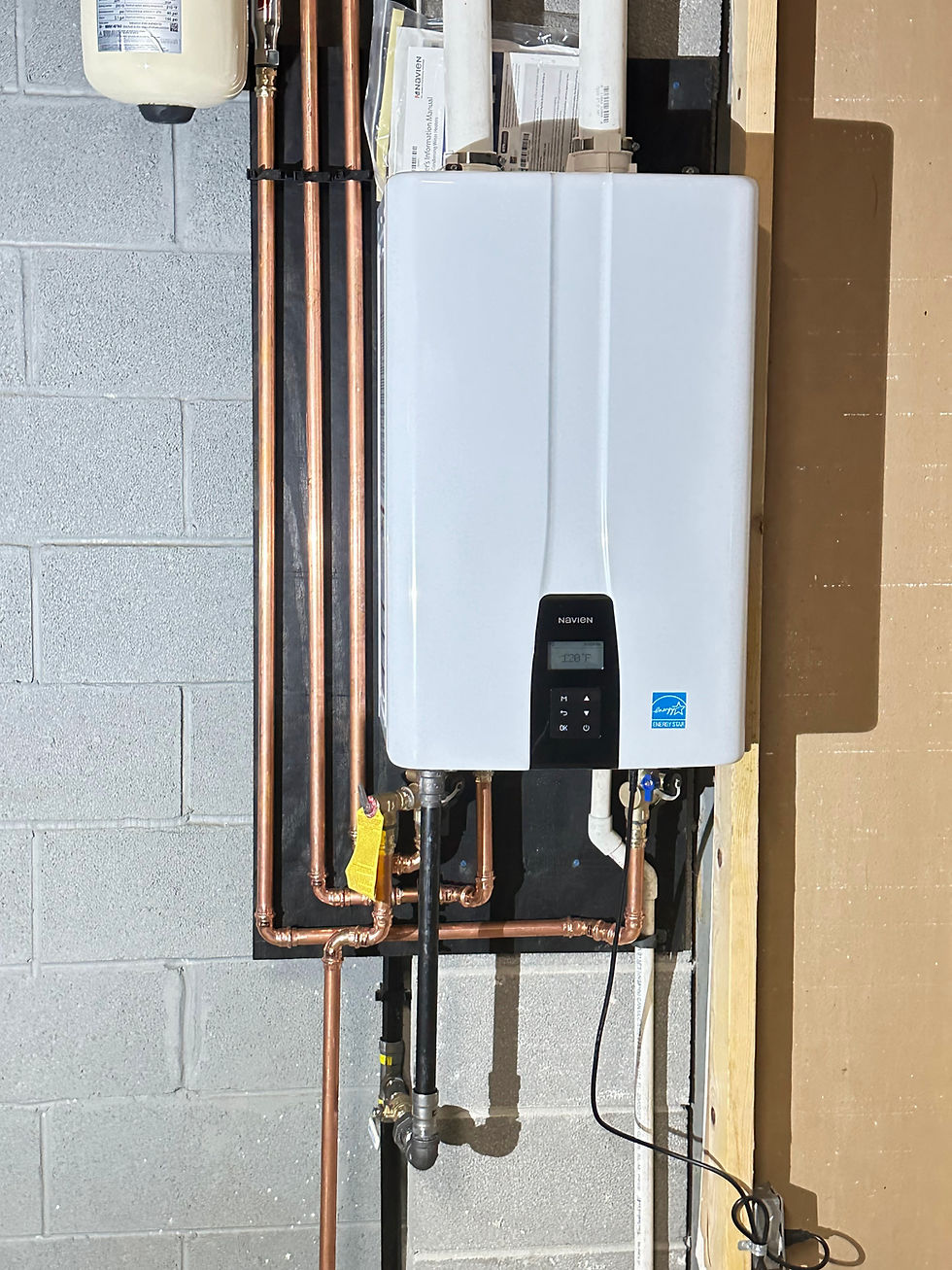
Tankless water heaters are appealing for their compact footprint and ability to provide continuous hot water within their capacity. They can also reduce standby losses because they do not keep a large tank hot around the clock. For homeowners with limited space, a new addition, or a strong preference for long showers, tankless can be a smart upgrade.
The trade-off is higher installation complexity and upfront cost. Many tankless conversions require changes to gas piping, venting, electrical service, condensate handling, or water lines. They also need periodic maintenance, especially in hard-water areas. A tankless system is a high-performing option when it is properly sized and installed, not a universal fix for every home.
Hybrid Heat-Pump Water Heaters
Hybrid heat-pump water heaters use electricity to pull heat from surrounding air and transfer it into the water. They can be very efficient, especially in a suitable basement, utility room, or other area with enough space and stable ambient temperature.
They are not ideal for every location. These units need clearance for airflow, produce some cooling and dehumidification, and may be louder than a standard electric tank. They also rely on electricity. Still, for the right household, the energy savings can be meaningful over the life of the unit.
Water Quality Can Shorten Equipment Life
If your home has hard water, sediment, iron, sulfur odor, or well-water concerns, those conditions should be part of the water heater conversation. Minerals can collect inside a tank, reduce heat transfer, create noise, and contribute to component wear. In tankless systems, scale can restrict internal passages and make regular flushing more important.
City water and private well water can both create problems, just in different ways. A well may introduce iron, hardness, or odor issues. Municipal water may still be hard enough to leave scale on fixtures and inside appliances. Treating the water does not just improve taste or protect plumbing fixtures. It can help protect the investment in hot-water equipment.
A water test and an honest assessment of the home’s needs can help determine whether a softener or a Water Right treatment system makes sense. The right treatment solution should address the actual water condition, not sell equipment a household does not need.
Installation Details Matter as Much as the Equipment
Even a well-made water heater can perform poorly when installation details are overlooked. Correct gas sizing, safe venting, proper electrical connections, shutoff access, temperature and pressure relief protection, expansion control where needed, and code-compliant piping all affect safety and long-term performance.
This is particularly important when changing equipment types. Moving from a conventional atmospheric-vent tank to power vent, tankless, or hybrid equipment can involve changes beyond the appliance itself. A qualified installer should explain those requirements upfront, including any added work that affects price or scheduling.
Makeithot Water Heaters LLC works with established professional brands such as A. O. Smith ProLine, Bradford White, State, Navien, Noritz, Rinnai, and Rheem. The goal is not to force every homeowner into one category of equipment. It is to match the system to the home and install it correctly.
When to Call for Water Heater Help
Call for service promptly if you have no hot water, a visible leak, a gas smell, water pooling near the heater, unusual burner behavior, repeated pilot problems, discolored water, or a pressure relief valve that is releasing water. If you smell gas, leave the area and contact your gas utility or emergency services as appropriate before scheduling routine service.
For less urgent concerns, such as inconsistent temperatures, reduced hot-water volume, rising utility costs, or a unit approaching the end of its expected life, a planned evaluation gives you more time to compare options. You can ask about repair costs, capacity, efficiency, water quality, financing, and installation requirements without making a decision in the middle of a breakdown.
Dependable hot water is not something homeowners should have to think about every morning. When your system starts asking for attention, get a clear diagnosis, ask the practical questions, and choose the solution that will serve your home well for years to come.

Comments