


Tankless Water Heater Installation for Ohio Homes
A tankless water heater can solve a familiar problem: one person showers, the dishwasher starts, and suddenly the next person gets lukewarm water. But tankless water heater installation is not a simple swap for a storage-tank unit. The equipment must be sized for your household’s real demand, supplied with enough gas or electrical capacity, vented correctly, and protected from the water conditions in your home.
For Northeast Ohio homeowners, those details matter even more. Winter incoming-water temperatures are cold, older homes may have undersized gas piping, and hard water or well water can shorten the life of any water-heating equipment if it is not addressed. A good installation begins with an honest look at the whole system, not a sales pitch built around the biggest unit on the truck.
What a Tankless Water Heater Actually Changes
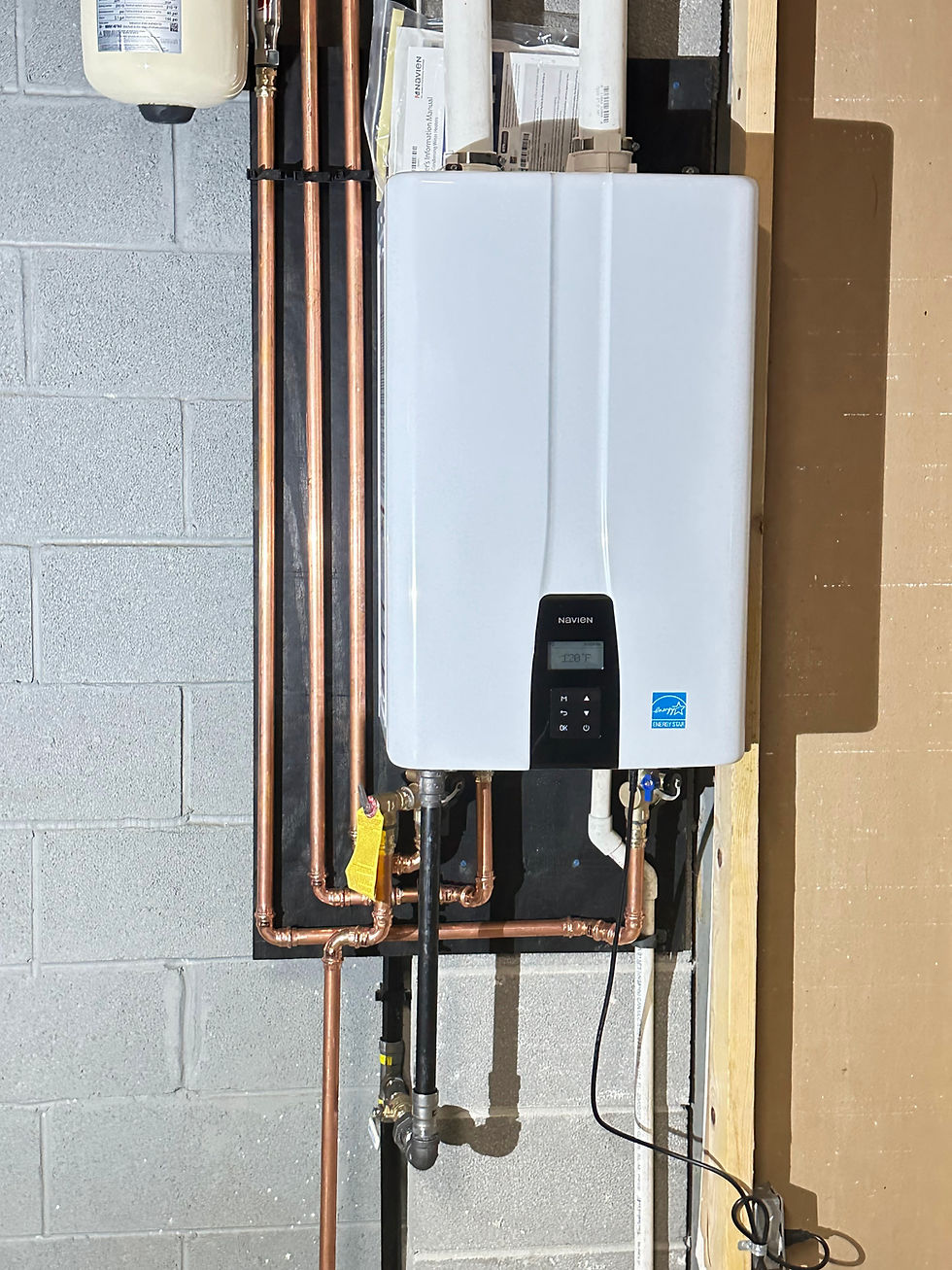
Unlike a conventional tank water heater, a tankless unit heats water only as it flows through the appliance. There is no 40-, 50-, or 75-gallon tank standing by with stored hot water. When a hot-water fixture opens, the unit detects flow, fires its burner or activates its electric heating elements, and heats water on demand.
That can provide a long supply of hot water for showers, laundry, and dishes, provided the unit is properly sized. “Endless hot water” does not mean unlimited hot water at every fixture under every condition. A tankless heater has a maximum flow rate at a given temperature rise. The colder the water entering the home, the harder the heater must work to reach your selected temperature.
For example, a household may be able to run two showers comfortably with the right gas tankless model, while adding a large soaking tub fill, washing machine, or multiple additional fixtures at the same time can exceed available capacity. The answer is not always a larger heater. Sometimes the best solution is changing fixture expectations, adding a second unit for a distant bathroom, or choosing a different water-heating approach altogether.
Tankless Water Heater Installation Starts With Sizing
Sizing should be based on peak simultaneous demand, not the number of bathrooms alone. A certified installer should ask how many people live in the house, when showers typically happen, whether there are body-spray showers or large tubs, and which appliances use hot water. They should also consider the temperature of incoming water during an Ohio winter.
Gas tankless heaters are commonly rated by gallons per minute, but that rating is tied to a specific temperature rise. A unit that delivers a high flow rate in warm-climate testing will produce less flow when starting with cold winter groundwater. That is why a model selected from a quick online chart can disappoint once it is installed in a Northeast Ohio home.
Electric tankless units have their place, particularly for point-of-use applications or homes with the electrical service to support them. Whole-home electric tankless installation, however, can require substantial electrical capacity. In some homes, it means multiple large breakers, heavy-gauge wiring, and potentially an electrical-service upgrade. A professional should put those requirements in writing before you commit to the equipment.
Gas Supply Is Often the Deciding Factor
Many high-output gas tankless water heaters require far more gas input than a typical atmospheric tank water heater. The existing gas line may be too small, too long, or already serving a furnace, range, fireplace, dryer, or generator. Simply connecting a new tankless unit to the old line without calculating available gas capacity can lead to ignition failures, error codes, reduced performance, or unsafe operation.
A proper evaluation considers the gas meter capacity, pipe size, pipe length, total connected appliances, and the appliance manufacturer’s requirements. In some cases, a dedicated larger gas line is needed. That work is part of doing the job right, not an unnecessary add-on.
Venting, Condensate, and Placement Matter
Modern condensing gas tankless models are highly efficient, but they create condensate that must be drained and handled correctly. The venting materials and termination locations must also match the appliance specifications and local code. This is not a place for improvised vent pipe or a shortcut through the nearest exterior wall.
The installer needs to plan for clearances around windows, doors, intake vents, utility meters, and other building features. They also need to account for freeze protection if piping or vent terminations are exposed to Ohio weather. Indoor, outdoor, and direct-vent installations all have different requirements.
Placement affects daily comfort, too. Tankless heaters heat water quickly, but they cannot eliminate the time it takes for hot water to travel through long plumbing runs. If a bathroom is far from the mechanical room, a recirculation system may be worth discussing. It can reduce wait time, though it adds installation cost and uses some energy to keep the plumbing loop ready.
Hard Water Can Turn a Good Upgrade Into a Service Call
Scale is one of the biggest threats to tankless performance. Minerals in hard water can build up inside the heat exchanger, restricting water flow and reducing heat transfer. Well-water homes may also have iron, sediment, sulfur, or other water-quality concerns that affect fixtures, plumbing, and water-heating equipment.
A tankless unit should be installed with isolation valves that allow for routine flushing and descaling. In homes with hard water, a water softener or appropriate treatment system may protect the new equipment and improve its long-term performance. This is especially relevant when a household already sees white buildup on faucets, spots on dishes, or frequent appliance issues.
Water treatment is not automatically required for every home, and the right recommendation depends on a water test and your specific conditions. Still, ignoring severe hardness because the new heater is “high efficiency” is a costly mistake. Efficiency does not make a heat exchanger immune to mineral buildup.
Permits, Code, and Safety Are Part of the Job
A professional tankless installation involves more than hanging equipment on a wall. It can include gas-system modifications, water-line changes, electrical work, venting, condensate piping, pressure-relief protection, combustion-air considerations, and permit or inspection requirements depending on the jurisdiction.
Licensed, insured installers understand that the installation manual is not optional. Manufacturer clearances, vent lengths, pipe sizing, drainage requirements, and startup procedures are there to protect the home and preserve the equipment warranty. After installation, the unit should be tested under real operating conditions, checked for leaks, and set to an appropriate outlet temperature.
Homeowners should also receive a clear explanation of maintenance. Most tankless units benefit from periodic flushing, especially in hard-water areas. The service interval depends on water quality, usage, and the manufacturer’s guidance. Keeping up with that service is far less expensive than waiting for reduced flow or a heat-exchanger failure.
When Tankless Is a Strong Fit
Tankless water heaters are often a smart choice for households that regularly run out of hot water, want to reclaim floor space, or expect to stay in the home long enough to value efficiency and equipment longevity. They can work especially well when the gas supply, venting path, and water quality support the installation without major complications.
They are not automatically the best answer for every home. If a home needs a large gas-line upgrade, difficult vent routing, electrical work, or extensive plumbing changes, the installed cost can rise. A high-performance conventional tank, hybrid heat-pump model, or another configuration may provide better value depending on your household and utility setup.
That is why the best recommendation starts with options. Makeithot Water Heaters LLC can evaluate tankless, conventional, hybrid, and water-treatment needs without pushing one answer for every house. A free honest second opinion can be useful when an estimate feels rushed, vague, or larger than expected.
Before scheduling tankless water heater installation, gather a few practical details: your current heater type and age, utility bills if available, the fixtures you use at the same time, and any known hard-water or well-water issues. Then ask the installer to explain the proposed unit size, gas or electrical requirements, venting plan, maintenance needs, and total scope of work in plain language.
The right tankless system should feel dependable, not complicated. With correct design and professional installation, it can give your household the hot water it needs without asking you to plan showers around a storage tank.

Comments