


Direct Vent Versus Power Vent Differences
A water heater replacement is not always a simple matter of swapping one tank for another. With direct vent versus power vent water heaters, the venting method affects where the unit can go, how it operates, what it costs to install, and what happens during a power outage. The right answer depends on your home's layout, existing vent path, available combustion air, and local code requirements.
For many Northeast Ohio homeowners, venting becomes the deciding factor when a conventional chimney-vented water heater needs replacement. A qualified installer should inspect the whole setup before recommending equipment, not simply quote the first model that fits the old space.
Direct Vent Versus Power Vent: The Main Difference
Both options are gas water heaters that send combustion gases outdoors. The difference is how they move air and exhaust.
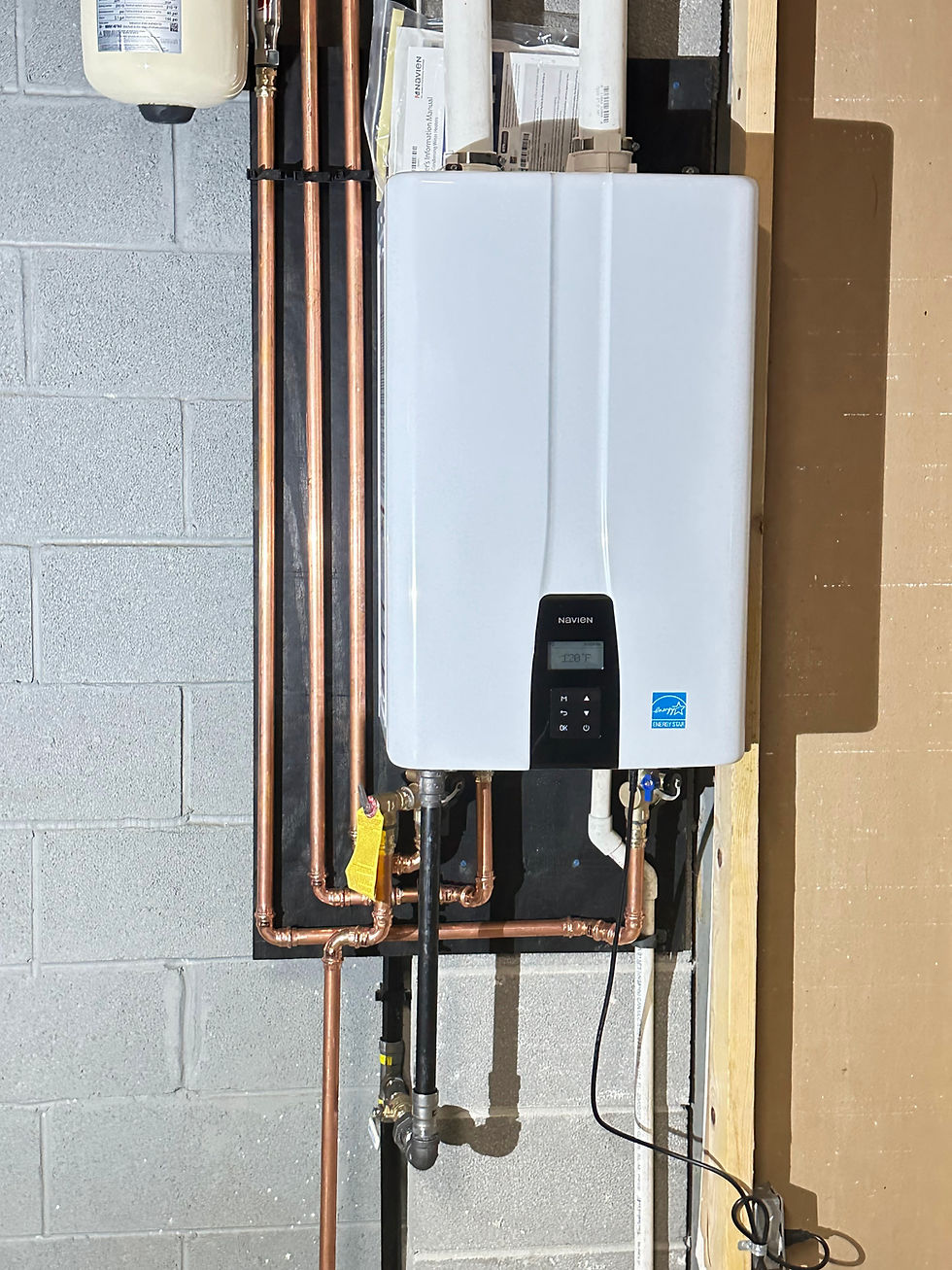
A direct vent water heater is a sealed-combustion appliance. It pulls combustion air from outside the home and vents exhaust back outside through dedicated piping. Some systems use two separate pipes, while others use a concentric vent that places the intake and exhaust in one larger assembly. Because the combustion chamber is sealed from indoor air, a direct vent unit does not rely on air from the utility room, basement, or garage to burn gas.
A power vent water heater uses an electric blower to push exhaust outdoors through approved plastic vent pipe. Most standard power-vent models draw combustion air from the room where they are installed. The blower gives the installer more flexibility than a naturally drafted appliance because the exhaust can often travel farther and use more routing options before it exits the home.
There is one detail worth clarifying: some water heaters are described as power direct vent models. Those combine sealed combustion with a powered blower. They are a separate category, and the exact manufacturer installation instructions matter. Do not assume every unit with a fan is the same kind of water heater.
When a Direct Vent Water Heater Makes Sense
A direct vent model can be a strong choice when the water heater sits near an exterior wall and the home does not have a usable chimney or vertical metal vent route. The sealed-combustion design can also be beneficial in a tight utility room, finished basement, or area where indoor combustion air is limited.
Because it pulls air from outdoors, a direct vent water heater is less affected by exhaust fans, clothes dryers, or other equipment that may depressurize the home. That can be a meaningful safety and performance consideration in newer, tighter homes or homes that have been heavily weatherized.
Direct vent equipment is often quieter than a power vent unit because it does not use a large exhaust blower. It may also be appealing to homeowners concerned about power outages. However, do not assume every direct vent water heater will operate when the electricity is out. Some models have electronic ignition, safety controls, or other components that may still require power. The equipment specifications determine what will happen in an outage.
The trade-off is placement. A direct vent unit generally needs a practical path to an exterior wall, and the intake and exhaust termination must meet required clearances from windows, doors, meters, corners, and other building features. A nearby wall alone does not guarantee the installation will work.
When a Power Vent Water Heater Is the Better Fit
A power vent water heater is often the practical answer when the water heater is not close to an exterior wall. Its blower can move exhaust through longer runs of approved vent pipe, which may allow the unit to remain in a basement, mechanical room, or interior utility area without relying on a masonry chimney.
This flexibility can be valuable in homes where a chimney has been removed, is no longer suitable for water-heater venting, or is shared with other appliances. It can also help when a homeowner wants to avoid major remodeling just to create a new vertical vent path.
The clear trade-off is electricity. The blower must run for the burner to operate, so a standard power vent water heater will not make hot water during a power outage unless the home has a properly designed backup power source. It also makes a noticeable fan sound during operation. Most homeowners find the noise manageable, but it is worth considering if the water heater is located near a bedroom, living area, or finished space.
Power vent units also require proper room air. Since many models use indoor air for combustion, the installation space must have adequate volume or approved openings for makeup air. Closing a water heater into a small closet without addressing combustion air can create safety and performance problems.
Installation Costs Depend on the Vent Path
It is tempting to compare only the price tags on two water heaters, but installation cost is usually driven by the complete job. The unit price matters, yet vent length, termination location, electrical work, gas piping, water connections, code upgrades, and removal of old venting can change the total significantly.
A direct vent installation may be straightforward if the water heater is already near an exterior wall with a compliant termination location. It can become more involved if the wall is brick, stone, difficult to access, or too close to windows and other openings.
A power vent installation may require a new electrical receptacle, properly routed PVC or CPVC venting, and a carefully planned exit point. Longer vent runs are possible, but every manufacturer sets limits for pipe diameter, fittings, total equivalent length, and slope. More elbows reduce the allowable run length. Those details are not optional, and they are not interchangeable between brands.
If your current water heater vents through a chimney, changing to either option may leave an old flue arrangement that needs evaluation. A furnace sharing that chimney may require changes as well. This is one reason an in-person assessment is more reliable than a phone estimate based only on tank size.
Efficiency and Operating Costs Are Not the Same Thing
Neither direct vent nor power vent automatically means the most efficient water heater. A standard power vent tank may be more efficient than an older atmospheric model, but its blower uses electricity. A direct vent unit may offer sealed combustion without being a high-efficiency condensing appliance.
For homeowners focused on reducing fuel use, compare the specific model's Uniform Energy Factor, warranty, recovery rate, first-hour rating, and venting requirements. Also consider your household's hot-water demand. A family that regularly runs showers, laundry, and a dishwasher close together may benefit more from the right tank capacity and recovery rate than from a small difference in efficiency numbers.
Hard water can affect this decision, too. Mineral scale can reduce water-heater performance over time, especially in homes on well water. Addressing water quality and maintaining the heater can protect the investment regardless of which venting method you choose.
Questions to Ask Before Choosing
Before selecting direct vent or power vent equipment, ask whether the proposed model has a compliant path outdoors, whether the space has adequate combustion air, and whether electrical work is needed. Ask how the unit will behave during a power outage and where the exhaust termination will be located.
It is also reasonable to ask whether the installer has measured the actual vent run, reviewed the manufacturer instructions, and checked gas supply requirements. A larger or higher-input water heater may need more than a simple connection to existing gas piping. Honest answers to these questions prevent expensive surprises after installation day.
Get a Recommendation Based on Your Home
The best choice is not always the newest-looking model or the one with the lowest upfront price. A direct vent water heater can be an excellent fit for a sealed-combustion installation near an exterior wall. A power vent unit can solve difficult vent-routing problems and preserve useful space in an interior mechanical room.
Makeithot Water Heaters can inspect the existing water heater, venting, gas connection, electrical needs, and household hot-water demand before recommending a path forward. If you are replacing a failed unit or planning an upgrade, ask for a clear explanation of the options, the trade-offs, and the work required to install it correctly. The goal is dependable hot water that fits your home for years, not a quick answer that creates another problem later.

Comments