


Water Heater Financing Options for Ohio Homes
A cold shower is a bad time to discover that a water heater replacement was not in the household budget. When the tank is leaking, the burner has failed, or the unit is simply at the end of its service life, water heater financing options can give Northeast Ohio homeowners room to make a sound decision without putting off needed work.
Financing should not turn an emergency into a rushed purchase. The right approach is to understand the full installed cost, compare the payment structure with your budget, and choose equipment that fits your home rather than accepting whatever is quickest or cheapest in the moment.
When Financing Makes Sense for a Water Heater
A water heater is one of those home systems that rarely gives convenient notice. You may see rusty water, hear popping from sediment buildup, find moisture around the tank, or lose hot water altogether. Some issues can be repaired, but a leaking tank generally calls for replacement. Waiting too long can risk water damage, more inconvenience, and limited choices when the system finally quits.
Financing may make sense when the replacement is unexpected, when a repair cost is approaching the value of a new unit, or when an upgrade provides meaningful long-term benefits. A homeowner replacing a failed standard gas tank, for example, may prefer manageable monthly payments over draining savings all at once.
It can also be useful for planned improvements. A tankless water heater, hybrid heat-pump model, power-vent unit, or water-treatment system can carry a higher upfront installation cost than a basic tank replacement. Spreading that cost out may let you choose equipment with the capacity, efficiency, and features your household actually needs.
Common Water Heater Financing Options
The best financing option depends on your credit profile, the project scope, available cash, and how long you expect to stay in the home. Ask for the terms in plain language before you agree to anything. A monthly payment is only one part of the decision.
Contractor-arranged financing
Many specialized service companies offer financing through a third-party lending partner. This is often the most straightforward path when you need a replacement quickly because the application and project process are connected. Depending on approval and the available program, homeowners may have a choice of payment terms or promotional offers.
Read the details carefully. Find out whether the rate is fixed, whether a promotional period applies, what happens after that period ends, and whether there is a prepayment penalty. Also ask whether the quoted payment includes the entire job: equipment, permits when required, venting changes, gas or electrical work, haul-away, and any accessories needed for a safe installation.
Home equity financing
A home equity loan or line of credit may offer a competitive rate for homeowners with sufficient equity. It can be a practical fit for a larger project, such as replacing a water heater while addressing aging gas piping, plumbing repairs, or a whole-home water-treatment need.
The trade-off is time and risk. Approval can take longer than a contractor-arranged application, and the home may secure the borrowing. It is not always the best answer when you need hot water restored today, but it can be worth considering for a planned upgrade.
Personal loans and credit cards
An unsecured personal loan can provide predictable payments without using your home as collateral. Rates and terms vary widely, so compare the total amount repaid rather than focusing only on the advertised monthly payment.
Credit cards can work for a smaller repair or for homeowners who can pay off the balance quickly. They are usually less attractive for a full replacement if a high interest rate will remain after an introductory offer ends. A low upfront payment can become expensive if the balance lingers.
Paying part now and financing the balance
If you have some savings available, a mixed approach may reduce the amount financed while preserving an emergency cushion. There is no universal rule here. Emptying a savings account to avoid interest may leave you exposed to the next home repair, especially in an older Northeast Ohio home where furnaces, sump pumps, and plumbing can all demand attention.
Look Beyond the Price of the Tank
Two water heater quotes can look similar at first and lead to very different results. The equipment itself is only one piece of the project. Correct sizing, fuel type, venting, combustion air, gas-line capacity, electrical requirements, drain-pan needs, expansion tanks, code requirements, and installation quality all matter.
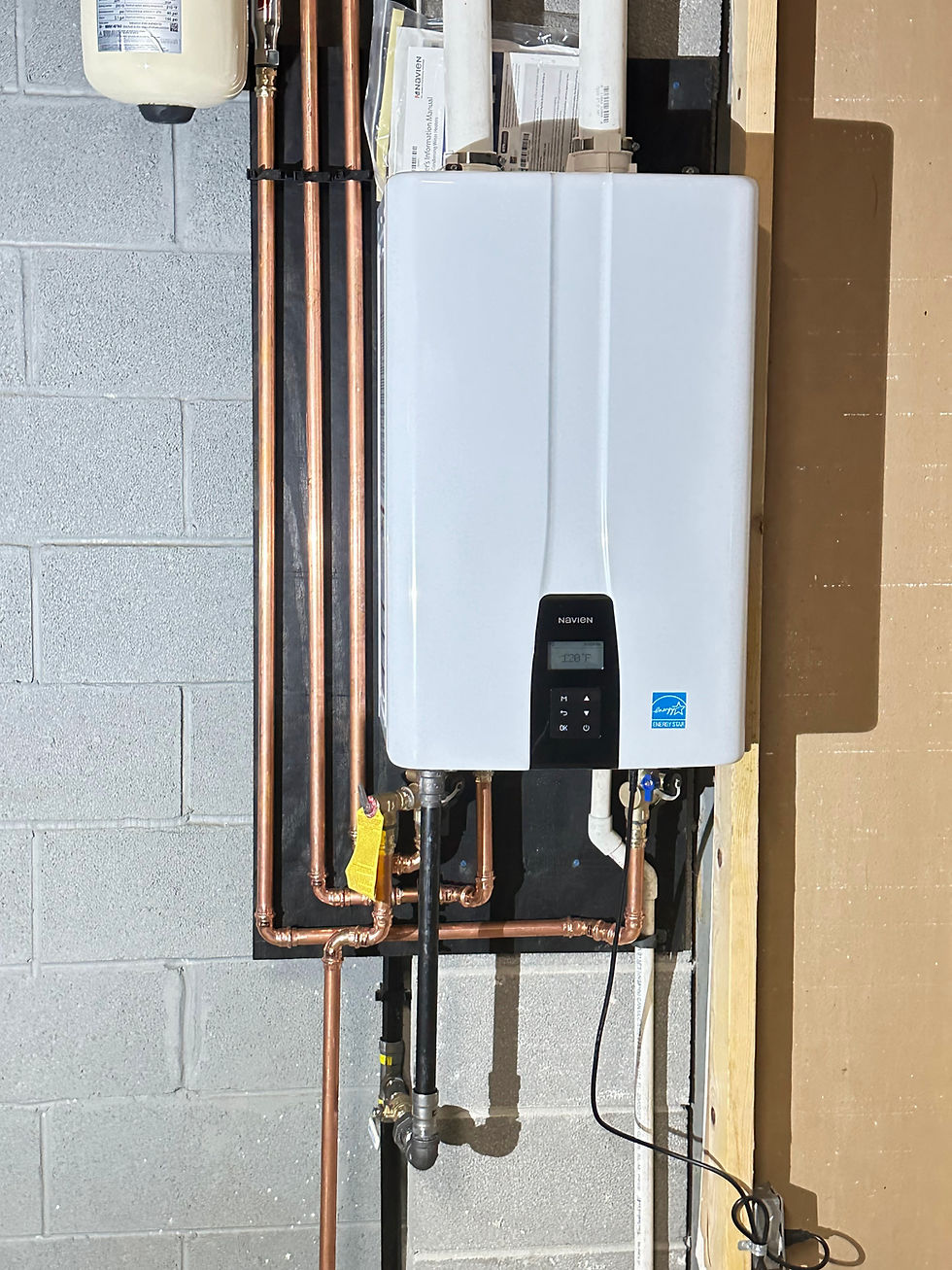
For example, a tankless upgrade may require a larger gas line, new venting, electrical changes, or water treatment to protect the heat exchanger. A hybrid heat-pump water heater needs adequate space and an appropriate location. A power-vent replacement requires attention to the vent run and condensate handling. Those details affect the real project cost and should be addressed before you compare financing offers.
A clear proposal should explain what is being installed and why. It should not pressure you into a particular brand or technology. Professional-grade equipment from manufacturers such as A. O. Smith, Bradford White, Navien, Noritz, Rinnai, Rheem, and State has different strengths depending on the application. The right answer for a two-person household is not necessarily right for a busy family with several bathrooms.
How to Compare Water Heater Financing Options Fairly
Start with the total installed price, then compare annual percentage rate, loan length, monthly payment, fees, and the total amount you will repay. A longer term can lower the payment but increase the total cost. A short term can save interest but create a payment that strains the budget.
Do not let a promotional offer do all the talking. Deferred-interest promotions deserve special attention. In some arrangements, interest may be charged retroactively if the balance is not paid in full by the deadline. Ask what happens if you are one month late, whether minimum payments will retire the balance in time, and whether you can pay early without penalty.
It also helps to compare the financing decision against the cost of delaying the work. A water heater that is leaking or unsafe should not be left in service simply because the payment choices feel complicated. A licensed, insured installer can help you separate a true emergency from a repair that can reasonably wait, then give you an honest recommendation based on the condition of your system.
Financing an Upgrade That Solves More Than One Problem
For homes on private wells or with hard municipal water, water quality can shorten water-heater life and reduce performance. Mineral scale can build up inside tank-style heaters and tankless heat exchangers, while hard water can affect fixtures, appliances, and cleaning throughout the house.
If testing shows a water-treatment need, it may be sensible to plan the heater and treatment system together. Financing a properly sized Water Right treatment system alongside a new water heater can address the cause of repeated scale issues instead of replacing equipment without correcting the conditions damaging it. That does not mean every home needs a softener or treatment upgrade. Water should be tested and the recommendation should match the actual problem.
The same practical thinking applies to repairs. Replacing a failed thermocouple or heating element may be the right move on a newer unit in otherwise good condition. Repeated repairs on an older heater with heavy corrosion, sediment, or declining efficiency may be money better applied to replacement.
Questions to Ask Before You Apply
Before choosing a payment plan, make sure you can answer a few basic questions: What is the complete installed price? What equipment is included? What is the interest rate and term? Are there late fees, origination fees, or prepayment penalties? Does the estimate include required safety and code work? And who will handle the installation if a problem appears after the job is complete?
You should also ask whether the contractor has evaluated the unit size and installation conditions rather than quoting from a photo alone. An accurate recommendation considers household demand, the existing setup, fuel availability, venting, water quality, and future plans for the home.
Makeithot Water Heaters LLC can explain replacement and financing choices without high-pressure sales tactics, whether you need a conventional tank, tankless unit, hybrid model, or help sorting out a repair-versus-replace decision. If another quote feels unclear, a free honest second opinion can give you the information needed to move forward with confidence.
Reliable hot water is a basic part of home comfort, not a luxury purchase. Choose a payment plan you understand, an installation scope that is complete, and equipment that serves your household well long after the monthly payments are gone.

Comments